
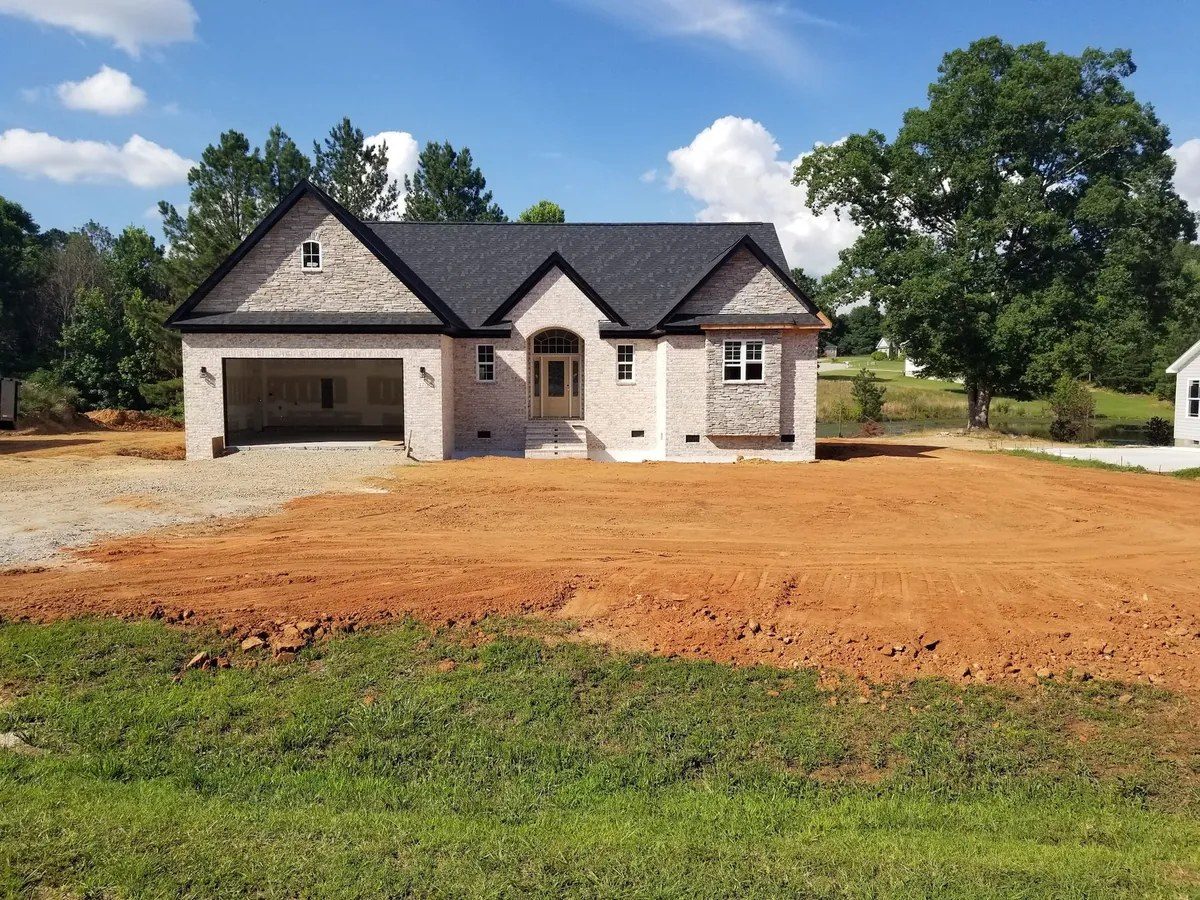
- Rough grading vs. fine grading in Spartanburg, SC comes down to precision: rough grading moves large volumes of soil to establish general elevation and slope, while fine grading brings the surface to its finished, exact level.
- The two phases use different equipment: heavy excavators and bulldozers for rough work, smaller box blades and laser-guided equipment for finish work.
- In Spartanburg, SC, clay-heavy soil and rolling terrain make both phases more involved than they are on flat, sandy ground.
- Skipping or rushing fine grading is one of the most common causes of drainage problems around new homes and garages.
- Understanding which phase your project is in tells you what trade work can start next and how long you still have to wait before final landscaping.
Understanding rough grading vs. fine grading in Spartanburg, SC starts with a familiar scene: you hired a crew, a bulldozer showed up, and now the lot looks like the surface of the moon. That is rough grading, and it is exactly what it sounds like. What comes after is a completely different operation with different tools, different tolerances, and a different purpose. Knowing which phase your project is in tells you what can happen next and, just as importantly, what absolutely cannot happen yet.
This post breaks down both phases clearly, including what equipment each one uses, what it accomplishes, and why the sequence matters for grading and site work on construction projects in Spartanburg, SC.
#What Is Rough Grading and What Does It Actually Do?
Rough grading is the first major earthwork phase, and its job is simple: move a large amount of soil to get the site close to the right shape and elevation. Close is the operative word. Rough grading is not precise. It establishes where high spots need to come down and where low spots need to be filled. It sets the general drainage direction of the property. It clears and strips topsoil so the structural fill underneath a slab or foundation sits on stable subgrade material, not loose organic soil.
At this stage, crews are working in tolerances measured in inches or even fractions of a foot, not fractions of an inch. The goal is to get the land in the right ballpark, not to bring it to a finish grade.
Topsoil and vegetation are stripped and stockpiled or removed. The subgrade is cut or filled to approximate design elevations. Slopes are established to move water away from the future building footprint. Excess material is either exported off-site or redistributed across the lot.
The equipment used at this stage reflects the scale of the work. Bulldozers handle bulk pushing and spreading. Excavators dig and move material in areas where precision over volume matters, like near property lines or around existing utilities. Scrapers are sometimes used on larger lots to move soil efficiently across long distances. These are big machines doing rough work, and they leave a surface that still needs significant attention before any finished construction can go on top of it.
#What Is Fine Grading and Why Does It Come Second?
Fine grading is the finishing pass. It brings the surface from "roughly correct" to "exactly right," and it happens after the rough work is complete and, on many projects, after underground utilities and drainage systems are already installed.
The tolerances here are measured in fractions of an inch. A concrete slab poured on a surface that is off by half an inch in the wrong direction can cause drainage problems that follow a homeowner for years. Fine grading prevents that. It also creates the precise slopes required for driveways, garage aprons, sidewalks, and yard drainage to perform correctly long after the crew leaves.
| Factor | Rough Grading | Fine Grading |
|---|---|---|
| Purpose | Establish general elevation and drainage direction | Bring surface to precise finished elevation |
| Typical tolerance | Plus or minus several inches | Plus or minus a fraction of an inch |
| Common equipment | Bulldozer, excavator, scraper | Box blade, motor grader, laser-guided skid steer |
| Timing in project | Early, before underground work begins | Late, after underground utilities are in place |
| What follows it | Underground utilities, drainage systems | Concrete flatwork, sod, final landscaping |
Fine grading uses lighter, more precise equipment. A box blade pulled behind a tractor can shave material and smooth a surface consistently. Motor graders bring a long, adjustable blade that achieves very consistent slopes across large areas. On residential work, laser-guided grade control systems have become more common because they remove the guesswork from matching a design elevation across a whole lot.
#Why Does Spartanburg's Soil Make Both Phases More Complicated?
Upstate South Carolina sits in a region where the soil transitions from the Piedmont red clay of the foothills to sandier coastal plain soils further south. In and around Spartanburg, you are mostly dealing with clay-heavy soil. That matters for both grading phases in ways that catch some homeowners off guard.
Clay holds water. It expands when wet and contracts when dry. It compacts differently than sandy or loamy soil. During rough grading, if clay subgrade is worked when it is too wet, it turns into a muddy mess that loses its load-bearing capacity. During fine grading, clay that has dried into hard clods will not blade smooth without additional effort. The rolling terrain around Spartanburg also means that many lots have natural high and low areas that require significant cut-and-fill work to make usable, rather than the relatively flat grading situations common on the coastal plain.
If the graded surface still has large clumps, ridges from equipment tracks, or obvious high and low spots visible from across the lot, rough grading is likely done but fine grading has not happened yet. If it looks smooth and consistent and stakes with colored ribbon are visible across it, fine grading is either in progress or recently finished.
#What Can and Cannot Happen Between the Two Phases?
A lot of work happens between rough and fine grading, and this is where many homeowners get confused about the sequence. After rough grading is complete, the site is in the right general shape for underground work to begin. That includes installation of water and sewer lines, electrical conduit, drainage pipe, and in some cases foundation footings. None of that work can go in at the right depth if the grade is not first established roughly correctly.
Once all underground systems are installed and inspected, the disturbed areas are backfilled and compacted. Then fine grading brings the surface to its final elevation, accounting for the now-buried infrastructure. According to the U.S. Department of Energy's guidance on moisture control, positive drainage away from a building's foundation is one of the most effective ways to prevent moisture intrusion in a home. Fine grading is what creates that slope reliably and